
Welcome to 2026. We are well past the days when simply uploading a screen recording to the internet was enough to get attention. Today, video is the default language of the internet. Whether you are an educator, a software developer, or a content creator, your audience expects your videos to be fast, clear, and highly professional.
However, a massive disconnect has grown between what viewers expect and what creators can reasonably produce.
Looking at the current landscape and listening to the frustrations of digital creators, a clear pattern emerges. The old way of making video tutorials is breaking down. Creators are burning out, and viewer retention is dropping for those who fail to adapt.
Here is a straightforward look at the state of screen recording in 2026, the biggest challenges creators are facing right now, and the essential recipe for creating content that actually thrives today.
Anchor pieces in this series: How to Choose a Screen Recorder in 2026: Buyer's Guide, Chrome Extensions vs Desktop Apps for Screen Recording, and Best Screen Recorders That Don't Require Editing.
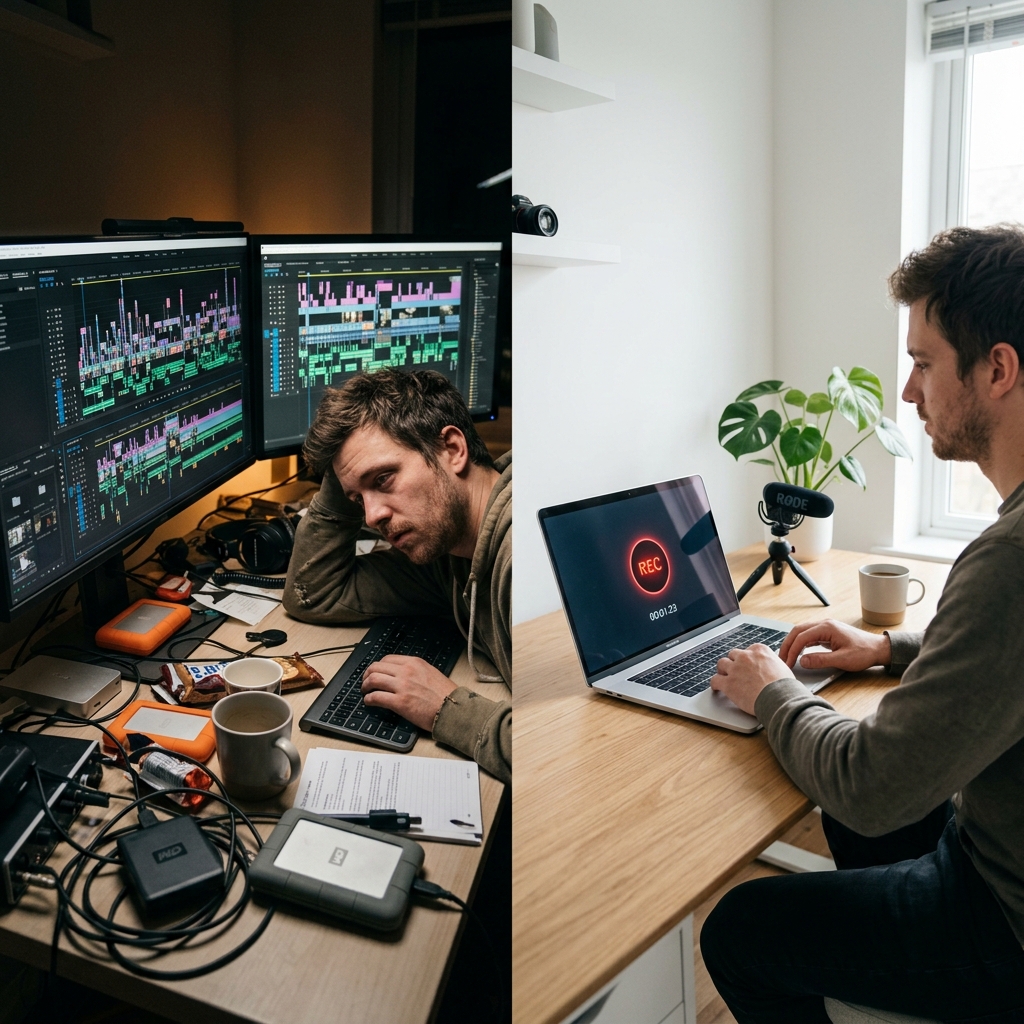
The Editing Fatigue Epidemic
If you ask any creator what their biggest bottleneck is in 2026, the answer is almost always the same: post-production.
Ten years ago, people accepted raw, messy screen recordings. Today, viewers immediately click away if the text is too small, the mouse is darting all over the screen, or the pacing is slow.
To keep viewers watching, creators are forced to spend hours in heavy video editing software. They have to manually cut out mistakes, add zoom effects so mobile viewers can read the text, and try to make the presentation look polished. For a five-minute tutorial, a creator might spend two hours editing.
This editing fatigue is the number one reason creators stop posting consistently. In 2026, creators do not need more complex editing tools; they need tools that eliminate the editing process entirely.
Why "State of …" Posts Earn Links (and How to Do It Honestly)
Roundups quote primary sources. If you run an annual creator survey—clear inclusion criteria, instrument PDF, field dates, and response count—you give journalists and UX or ed-tech blogs something concrete to cite. Publish the methodology alongside charts; separate facts you measured from opinions you infer. Update the post when you rerun the survey so the URL stays trustworthy.
This page is a framework, not a fabricated poll: when Cubix publishes original numbers, they will live in a dedicated report with those disclosure details. Until then, treat any third-party "statistics" without methods as noise.
What Viewers Demand (and Creators Need) in 2026
To survive the current digital landscape, a screen recording must check three very specific boxes. If it misses even one, the viewer will go find another video.
1. Mobile-First Readability (Intelligent Zoom)
The vast majority of tutorial and demo content is now consumed on mobile devices. If a creator records a full, wide desktop monitor, the text will be microscopic on a phone.
What Creators Need: They need a way to dynamically zoom in on the action without having to set manual keyframes in an editing bay. Viewers need to see the exact button being clicked or the exact text being typed, clearly and instantly.
2. Distraction-Free Viewing (Smooth Cursors)
Nothing ruins a professional presentation faster than a nervous, shaky, or hyperactive mouse cursor. In a high-definition video, every erratic twitch of the hand is captured, creating a chaotic and visually exhausting experience for the viewer.
What Creators Need: The presentation needs to look confident. Creators need a way to standardize their on-screen movements so the viewer's eyes are gently guided, rather than jerked around.
3. Studio-Quality Aesthetics (Clean Backgrounds)
A messy desktop background filled with personal files and random folders instantly destroys credibility. In 2026, the aesthetic of the video is just as important as the information within it.
What Creators Need: A way to instantly isolate the software they are teaching and place it in a clean, branded, or visually pleasing environment, without needing a green screen or complex masking techniques.
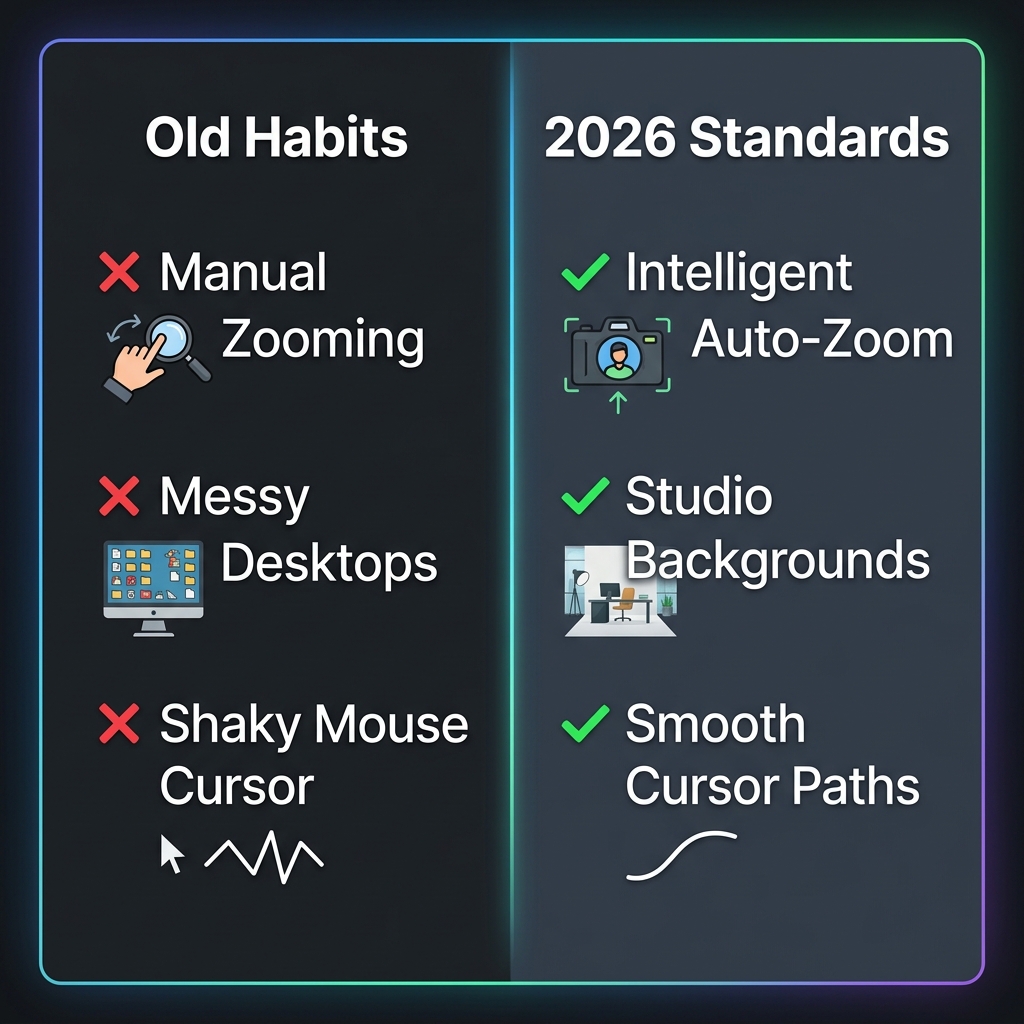
The End of Manual Editing
The biggest takeaway from the state of screen recording today is that the workflow has to change. Creators can no longer afford to separate the "recording" phase from the "editing" phase.
To keep up with audience demands and maintain a consistent publishing schedule, the editing has to happen while the recording is taking place.
That shift is why capture-time tools matter: Cubix Capture applies auto-zoom, smooth cursor paths, and live backgrounds during recording so clarity and aesthetics are not deferred to a second project.
The state of screen recording in 2026 is about working smarter, not harder—you should not need a full-time edit bay to teach software well.
Related reading: